
Solas Strive 2 손기정 Sohn Kee Chung
손기정 Sohn Kee Chung
Doing the right thing, even when it is hard.
Summer Olympics, 1936, Berlin. Jesse Owens, Nazi propaganda, and Korean marathon runner 손기정 Sohn Kee Chung.
Sohn is the first Korean Olympic medalist, winning the gold medal in the marathon. Sohn set a new OR @ 2:29:19 (~3 minutes slower than the WR he broke the year before). Beside him in 3rd place is his team mate, 남승룡 Nam Seung-ryong.
Sohn (23) should be elated.
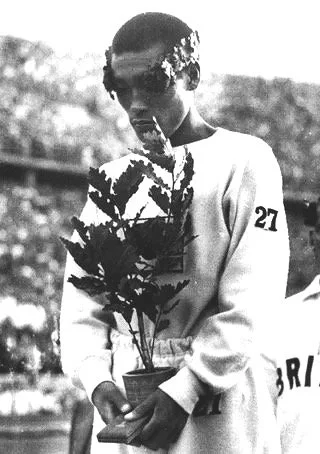
Instead, Sohn wears a look of shame, seriousness, and sadness.
The medal ceremony begins. Speakers blare the Japanese anthem. Across Sohn’s chest, the Japanese flag. On the stadium scoreboard, #1 - Son Kitei (そん きてい), the name he is forced to compete under by his oppressor’s.
Not his country’s anthem. Not his flag. Not his name.
In an act of defiance, Sohn bows his head and rejects the Japanese national anthem. He covers the flag with bay leaf sprigs. This brave act of nationalism is immortalized in the photographs shown above.
For winning the marathon, 손 was awarded a Bronze Corinthian Helmet, discovered at the Temple of Zeus in Olympia. Sohn donated it to the Korean National Museum.
Sohn always made it clear to reporters that he was Korean, and always signed his name in 한글 (which he learned in secret).
After liberation, Sohn coached South Korea to a 1950 Boston Marathon sweep. Later, he mentored Olympic gold medalist Hwang Young-jo. In 1988, he carried the torch into Seoul’s Olympic Stadium to a standing ovation, finally recognized worldwide for what Korea had known all along.
Sohn Kee-chung’s autobiography, My Motherland, My Marathon (나의 조국 나의 마라톤), is included in South Korea’s school curriculum. His life story serves as a poignant example of resilience and national pride during the Japanese colonial period.
Sohn was under immense pressure. When the moment arrived, the boy from Sinuiju who used to run with stones strapped to his back and his pockets filled with sand, showed up. And we’re not talking about the race.